The next industrial revolution is underway and will be an integral part of metal product manufacturers.
Digital technologies applied to the industry can provide many answers through methods and tools that define an intelligent sheet metal production unit. Now that the industry has changed, flexibility and efficiency are crucial requirements for managing small production batches within short delivery times.
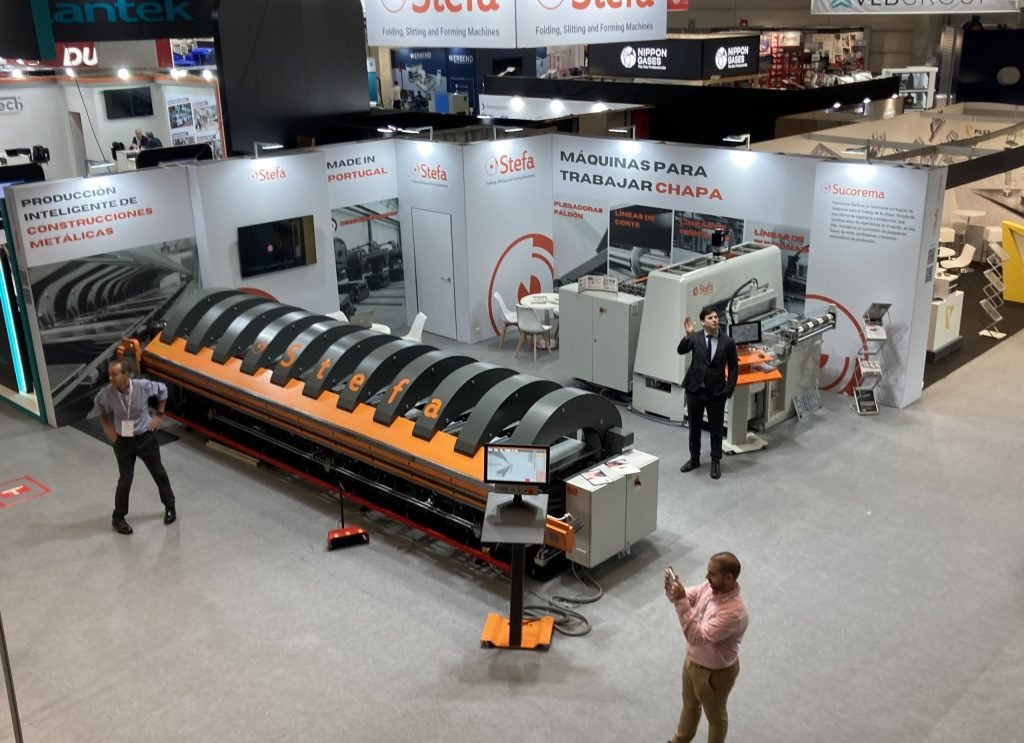
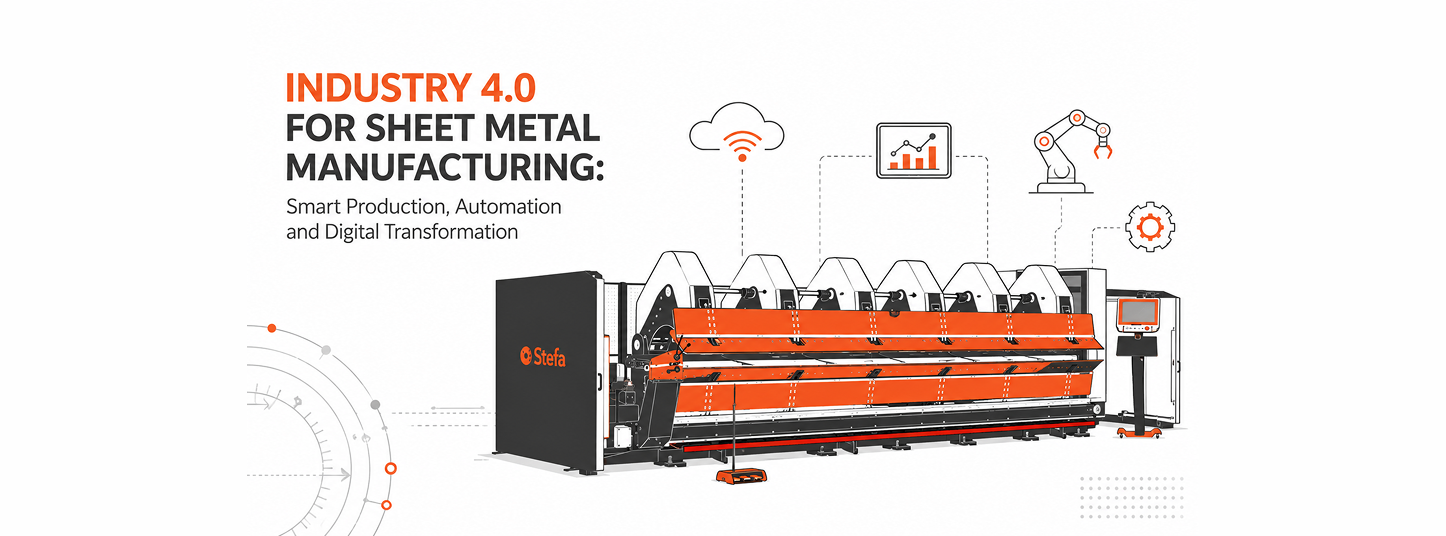
Stefa machines are designed, built and sold as flexible equipment offering global systems for sheet metal production that implement the Industry 4.0 principle by providing sheet metal manufacturers with three vital elements in their production: Flexibility, Connectivity and Intelligence.
Flexible Manufacturing Systems for Sheet Metal Processing
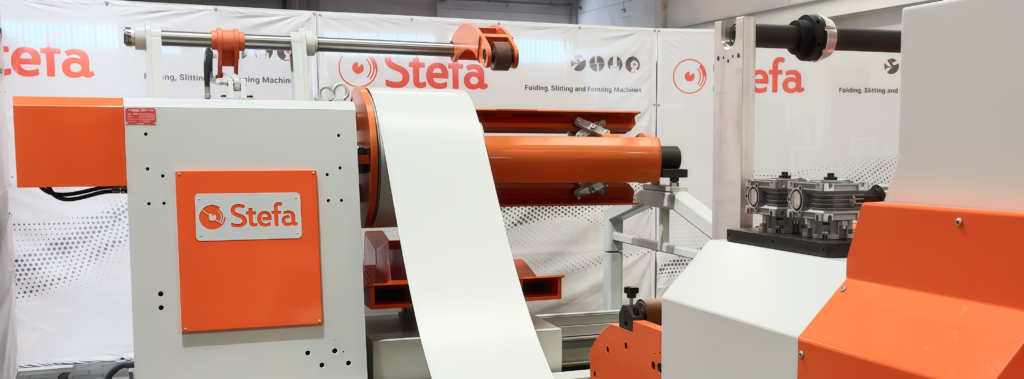
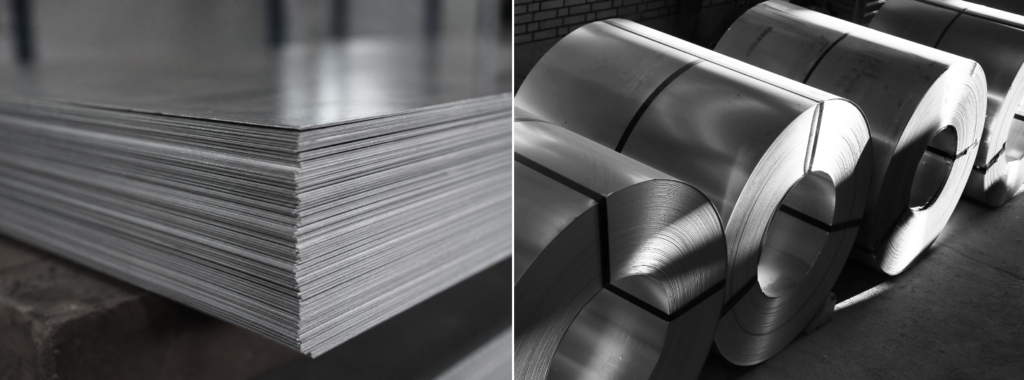
For Sucorema, flexibility means transforming coils of sheet metal into a variety of metal products with minimal operator intervention through various operations such as cutting, drilling, bending or profiling, on a single production line.
Stefa machines are therefore able to respond to the needs of today’s market, where there is a progressive demand for greater supply and complexity in the end product, with equipment that allows for a variety of operations.
An example of this is the innovative Coil Punching PRR unit, a rotary press for coils up to 750mm wide, equipped with a precise and fast servo punching disc, with a capacity of up to 10 tools to be applied to structural profiles which, combined with fast and flexible automation, can be integrated with the ElitePunch software, which allows the transfer of cad files for almost instantaneous production parameterization.
In this way, the manufacturer is ready to respond to the increasingly challenging needs of the construction market, where metal architecture is breaking barriers every day.
Smart Factory Connectivity for Metal Fabrication Equipment
Machines are moving from being static pieces of equipment to being “living” elements with extra production functions. In other words, the primary components of the machines will communicate their status to central software, whether it’s the completion of a manufacturing order or an alarm from a component, alerting it that it’s time for maintenance.
This connectivity will give production owners greater control over production. Considering that production capacity corresponds to the sum of real work and wasted work, connectivity, together with automation, will have the ability to reduce, if not eliminate, redundant activities or those with little value that normally occur at the beginning and end of automated production, such as the handling of raw materials.
Decentralization is another key factor that will increasingly make a difference in the future. The production manager will have greater control: inputting what needs to be produced, on various pieces of equipment and with minimal intervention from the machine operator.
This also ensures that the manpower factor is reduced, in terms of specialization, where the “masters” of the factory can easily get around the lack of specialized manpower or the necessary learning times.
A practical example of this is the advanced EliteBender software equipped on Stefa VH Folding Machines, where it is possible to purchase an office license and create a network connection between an office PC and the machine. This makes it possible to create production orders and program metal profiles remotely, where the machine operator only has to worry about handling the material, avoiding programming errors and making unnecessary quantities.
Intelligent Sheet Metal Production with Real-Time Data Analysis
One of the fundamental concepts of Industry 4.0 is Big Data. It refers to the collection and processing of large volumes of production data to generate valuable insights. This data is gathered in real time while machines are operating, allowing intelligent algorithms to identify issues and reveal production trends almost instantly.
By collecting and analyzing this information, manufacturers gain a clearer view of their entire production chain. The expertise accumulated by sheet metal producers over many years takes on a new dimension, as data-driven insights challenge traditional assumptions and support more informed decision-making.
The manufacturing industry is steadily shifting from large-scale stock production to smaller production runs tailored to actual demand and delivered within increasingly shorter timeframes. For sheet metal manufacturers, this is not a new challenge but an everyday reality that requires flexibility and responsiveness.
Today, competitiveness is no longer defined solely by price or delivery speed. The real challenge lies in production efficiency — achieving optimal machine setup and consistent quality regardless of part geometry, material properties, or sheet thickness.
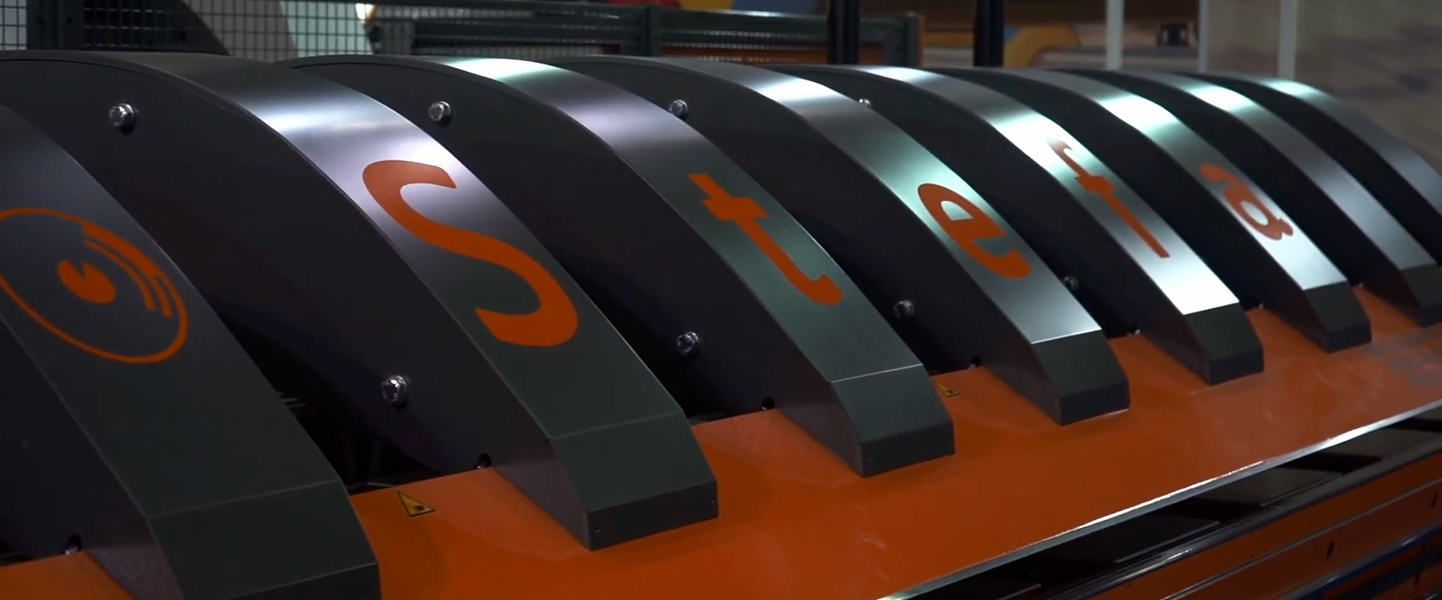
The technology integrated into Stefa VH folding machines is a practical example of manufacturing intelligence in action. The machine automatically adjusts according to the sheet thickness, optimizes cutting length for each specific part, and compensates for material springback using corrections derived from an extensive materials database. These adjustments continuously evolve to ensure greater accuracy and productivity.
This is the essence of intelligent manufacturing: providing accessible and easy-to-use solutions that improve process control, optimize production workflows, and eliminate hidden downtime that directly impacts efficiency and competitiveness.